Myntra
Redesigning Myntra's Wishlist
Helping Shoppers Decide, Not Just Save
Role
UX Researcher + Interaction Designer
Duration
48 hrs
Tools
Figma , Figma AI, Claude design

Overview
Myntra's wishlist is where people save things they mean to buy but most of that intent never converts. Sometimes it turns into a purchase. Often, it doesn't. I noticed this in my own behavior: saving similar items "to decide later," then redoing all the research anyway when I came back.
Challenge
Saving a product takes one tap. Deciding between saved products takes real effort reopening pages, rereading reviews, rechecking sizes, comparing tabs. The wishlist helps people save. It never helped them choose.
Solution
I gave Maya, Myntra's existing AI assistant, a new job but helping people decide. Instead of a chatbot, Maya works quietly in the background: comparing saved items, pulling out what actually matters (fit, quality, reviews, price), and showing a clear recommendation with the reasoning behind it. The user still makes the final call removing the re-research.
Process Followed

Research
The problem started as my own frustration. Personal pain is a hypothesis not evidence.
I validated it three ways.
UX Audit
Audited Myntra's existing wishlist and Maya AI experience to identify gaps in the save-to-purchase journey.

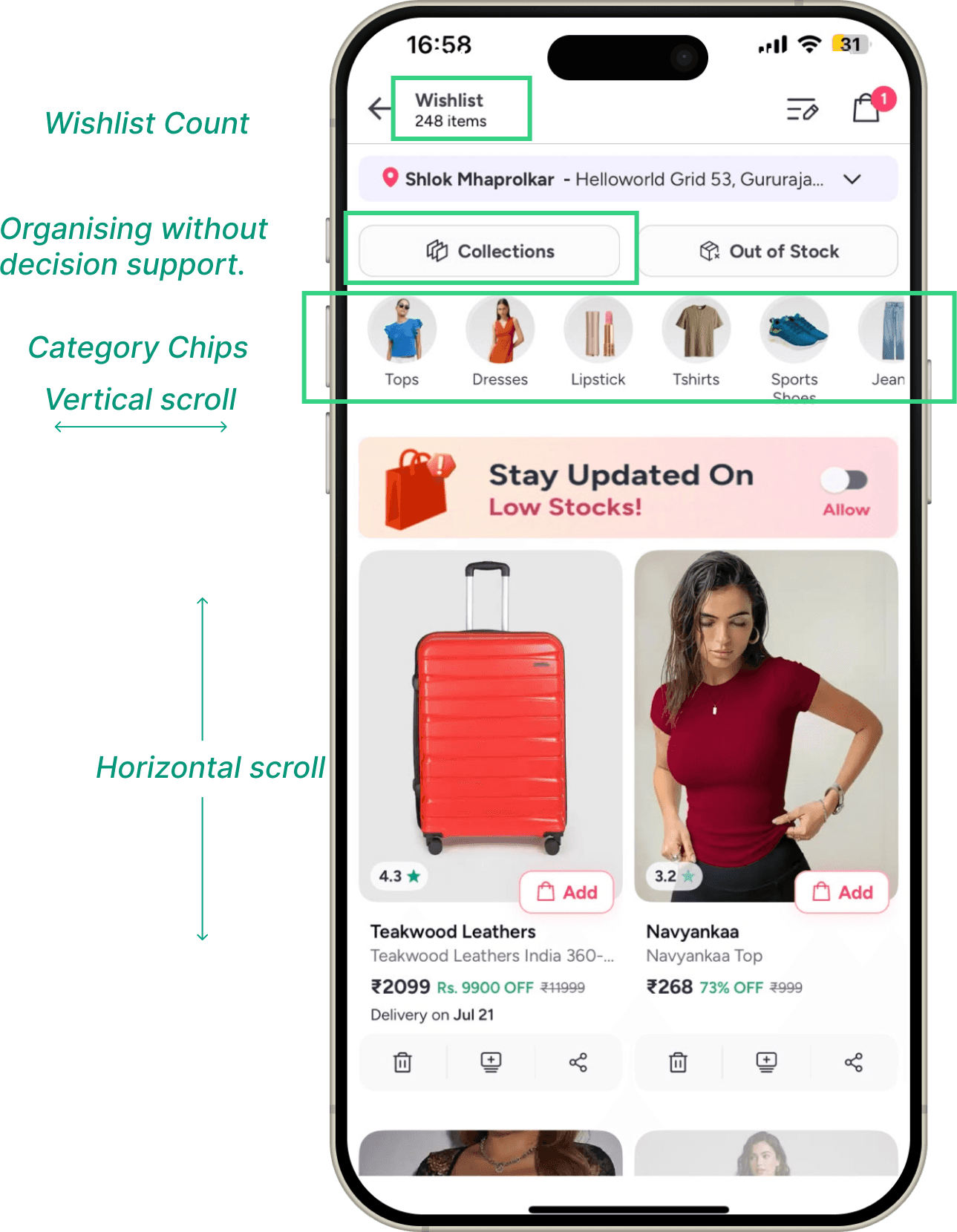
Wishlist Flow
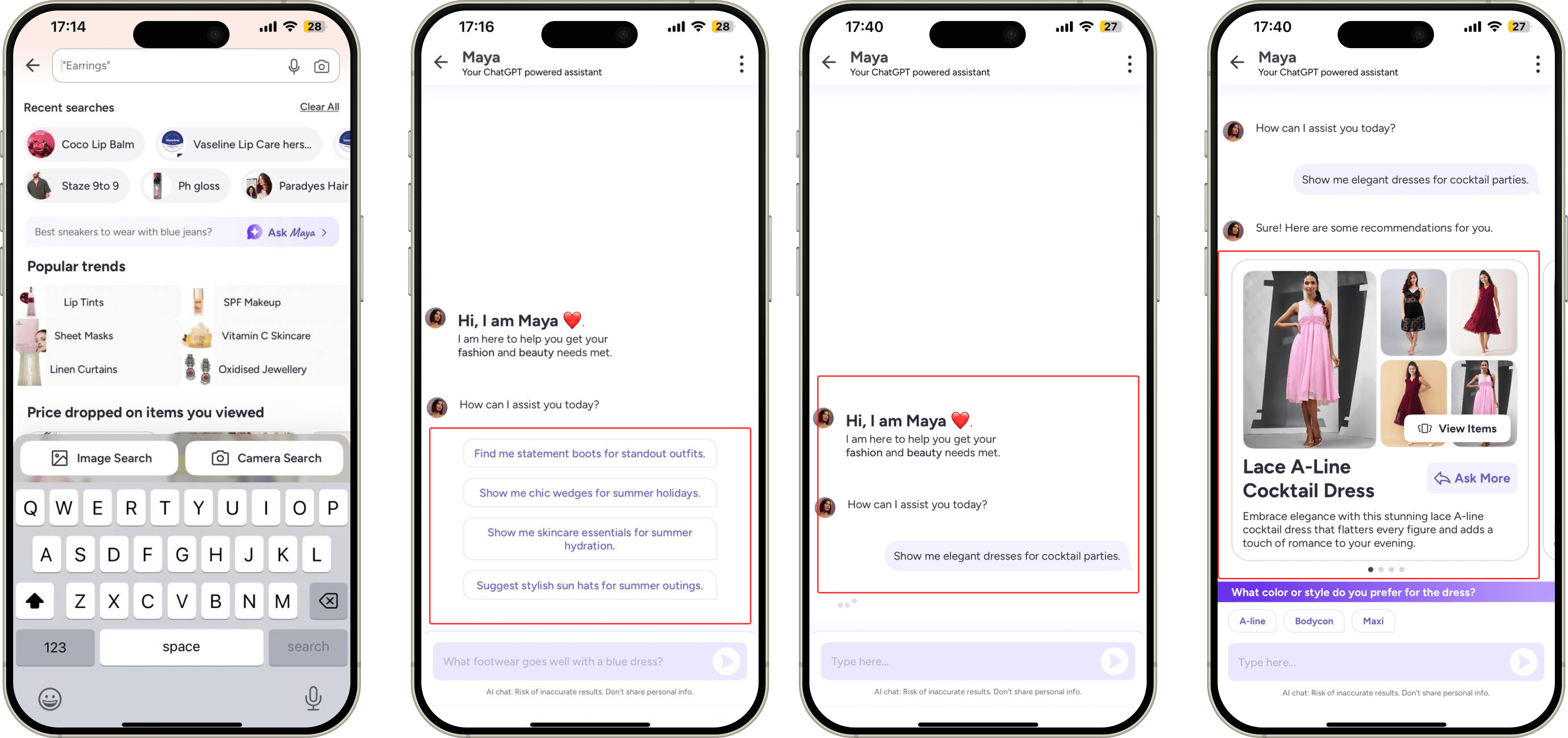
Maya - AI Assist Flow
248 items, dumped
The count itself is the problem the wishlist has become
a storage dump, not a decision space. Volume this high
means nothing gets revisited.
Manual organization
Category chips (horizontal) and Collections
(vertical) both need the user to sort effort on
top of effort, and neither helps choose.
Similar items sit unconnected.
Two similar dresses can be rows apart with no
relationship drawn the comparison need is invisible.
Built to save, not to choose
Products are stored, but users receive
no decision support when they're ready
to buy.

Primary and Secondary Research
Conducted Survey and Interviewed 10 users on how they actually save, revisit, and decide between wishlist items plus an audit of Myntra's existing wishlist and Maya experience, screen by screen.

Key Insights
No guidance decision making
Existing apps optimize alerts, not decisions.
Wishlists help users save, not decide.
Most wishlist intent never converts.
Defining Problems

HMW help users decide from their saved items and buy with confidence especially when a sale hits?
HMW we help users choose between their similar saved items at the moment they're ready to buy without making them redo the research?
HMW help users easily find the products from wishlist AND help in making decision?
Final problem statement
Shoppers save products intending to buy later but when they return, similar items get buried and hard to find, and the wishlist doesn't help them decide between what they do find. They manually re-compare, revisit reviews, fit, and price creating friction at the highest-intent moment and increasing drop-off.
Ideation

Brainstorming
Studied AI and wishlist-style features across leading apps not for their wishlist specifically, but for how they used AI to help people decide.
Goal was to see how other apps already use AI well, and borrow patterns that could work inside Maya.

Zomato
A collage layout mixing real photos, ratings, and context reads as a summary,
not a plain list. Shaped how Maya's results screen presents saved items.

Nykaa
The recommendation-summary idea AI distilling
reviews into a takeaway

Lenskart
Products are shown in a swipeable carousel.
AI provides product details and fit information for each item.

Amazon
Side-by-side comparison structure review
summary across dimensions

Wishlist Features
Flow Chart
(Maya) AI Decision Flow

User Flow

Solution
“Maya”, your wishlist decision-maker
Turns your cluttered wishlist into quick, confident decision right when the user is ready to buy
Search Within Your Wishlist
user types what they want ("black dress"), Maya instantly
surfaces it from their own saves. Quick action, zero scrolling.
Transparent AI Analysis
Maya reads reviews, fit and returns and shows her thinking,
so the user trusts the result instead of guessing.
Transparent AI Analysis
Maya reads reviews, fit and returns and shows her thinking,
so the user trusts the result instead of guessing.
Build a Shortlist Effortlessly
One tap adds an item to compare; the shortlist builds as the
user swipes. No extra steps, no re-searching.
Compare that actually decides
Two picked products, side by side, judged on what matters
(fit, price, quality) with honest warnings, not just praise.
Why AI, why Maya
Filters can sort, but they can't read reviews or reason about trade-offs the exact thing users were already doing manually.
A chatbot adds friction at the wrong moment. Someone ready to buy wants a verdict, not a conversation.
Myntra already had an AI assistant just disconnected from the wishlist
Instead of building a new agent, I gave Maya a new job: helping people decide, not just answering questions.
Maya is a decision layer, not a chatbot. She shows the evidence — the user makes the call.
Information Architechture

Wireframe

Final UI Screen - Prototype Link


Impact I'd Expect
Higher wishlist conversion more saved intent turning into purchases (industry baseline: just 5–20%).
Fewer abandoned decisions rescuing the shoppers who currently give up at the choice.
Lower return rates because fit and returns evidence de-risks the buy .
Faster decisions the re-research tax removed; minutes become seconds.
What I Learned
I set out to help users organise large wishlists. The research redirected me organisation wasn't the real problem. Deciding was.
Following the evidence instead of my first instinct reshaped the entire project. And the bigger lesson: solving one high-intent moment well creates more value than redesigning an entire experience.